Why Choose Kansas City?
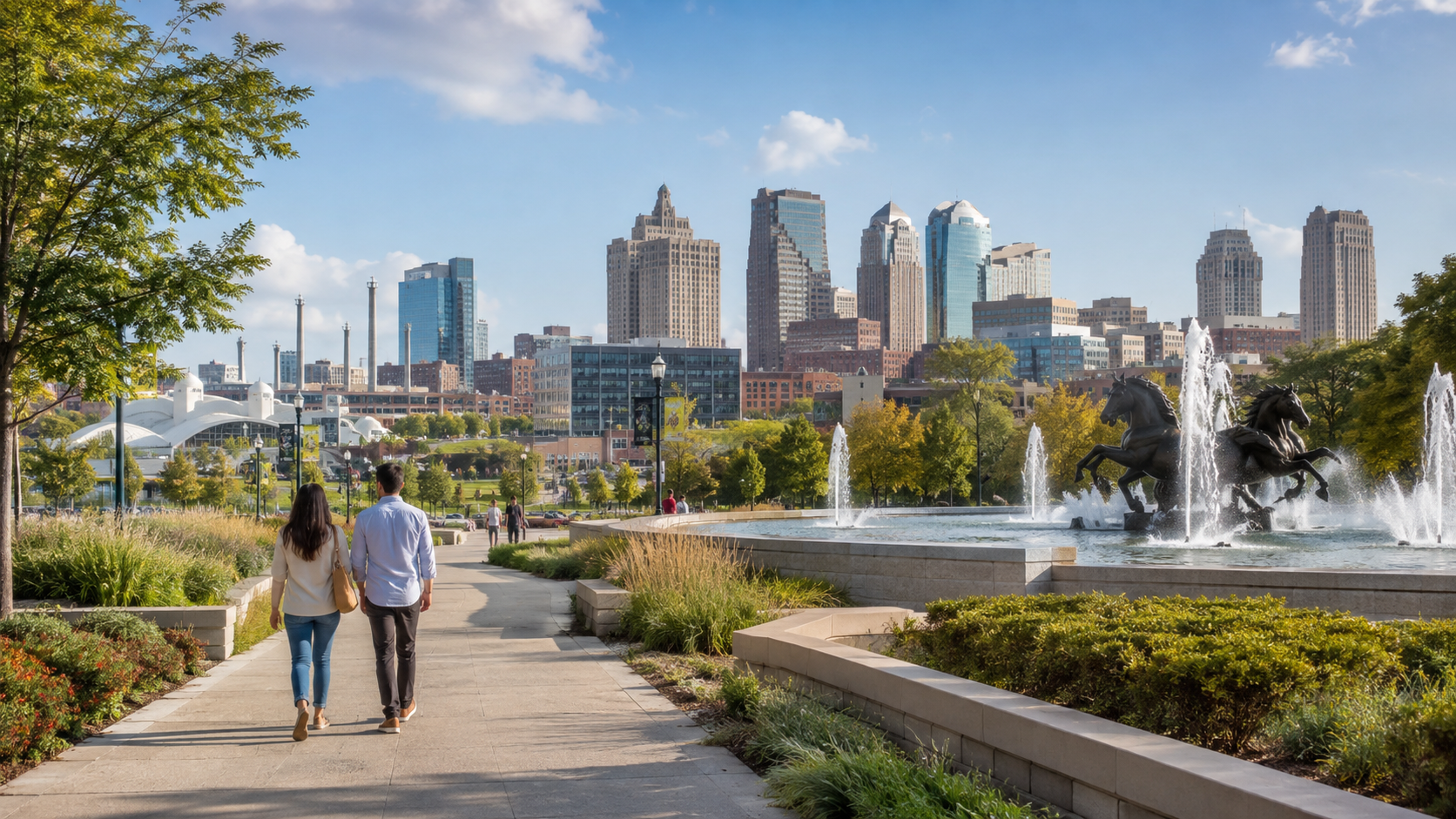
Kansas City offers a wide variety of lifestyles within one city. Residents can choose walkable urban districts, historic neighborhoods, suburban communities, or areas close to major parks.
Additionally, the city has major employers in healthcare, government, technology, finance, logistics, and professional services. Sports, music, museums, and restaurants provide plenty to do outside work.
Cost of Living
Housing expenses vary considerably across Kansas City. Downtown apartments, historic houses, newer subdivisions, and suburban-style properties each come with different costs.
Moreover, residents should consider property taxes, utilities, insurance, transportation, and possible homeowner association fees.
Older homes can also require additional maintenance. Therefore, buyers should compare total ownership costs before choosing a neighborhood.
Real Estate and Housing Market
Kansas City’s large geographic footprint creates a diverse housing market. Buyers can find historic houses, ranch homes, apartments, lofts, townhomes, condominiums, and newer construction.
Downtown and Urban Living
Downtown, River Market, and the Crossroads provide apartments, lofts, and condominiums near restaurants, entertainment, workplaces, and transit.
These areas can appeal to residents who prefer shorter trips and a more urban environment.
Established Neighborhoods
Brookside, Waldo, and other established areas offer tree-lined streets and traditional homes.
Housing styles vary by neighborhood. Consequently, buyers can compare older architectural character with more conventional residential properties.
North Kansas City Areas
Kansas City extends well north of the Missouri River. These sections contain newer subdivisions, established neighborhoods, commercial areas, and convenient airport access.
Education
Kansas City Public Schools serves many neighborhoods in the urban core. KCPS offers neighborhood schools and specialized Signature Schools.
Neighborhood-school assignments depend on a student’s home address. Meanwhile, Signature Schools require an application and may use a lottery. Enrollment is currently available for the 2026–2027 school year.
However, Kansas City’s municipal boundaries extend across several public school districts. Therefore, families should verify the district for each prospective address. Missouri provides current school-district boundary resources.
Healthcare Facilities
Kansas City has an extensive medical community.
University Health operates two acute-care hospitals. University Health Truman Medical Center is located near downtown in the UMKC Health Sciences District. Its second hospital serves southeast Kansas City.
Numerous additional hospitals and specialty providers operate throughout the metropolitan area. Therefore, residents have substantial healthcare choices.
Recreation and Leisure
Kansas City has an unusually large park system.
KC Parks operates 220 parks, more than 130 miles of greenways, and nearly 12,000 acres of parkland.
Residents can find playgrounds, trails, sports facilities, community centers, nature areas, and neighborhood green spaces throughout the city.
Dining and Shopping
Kansas City is especially known for barbecue, but the dining scene extends far beyond one cuisine.
The Crossroads, River Market, Westport, and Country Club Plaza provide different combinations of restaurants, cafes, nightlife, and shopping.
Additionally, neighborhood commercial districts offer local businesses and everyday services closer to residential areas.
Events and Festivals
Kansas City maintains a busy annual events calendar.
Major 2026 events include First Fridays, Kansas City Irish Fest, Plaza Art Fair, cultural festivals, sporting events, and numerous arts celebrations.
The city’s calendar also includes neighborhood activities and public events throughout the year.
Transportation and Accessibility
RideKC operates bus, rapid-transit, paratransit, microtransit, and other transportation services throughout the Kansas City region.
The expanded KC Streetcar is particularly useful in central Kansas City. It now runs approximately 5.7 miles from the Riverfront to UMKC, serving 31 platforms.
Streetcar rides remain fare-free.
Interstates 29, 35, 49, and 70 provide major regional connections. Kansas City International Airport serves commercial air travelers.
Conclusion
Relocating to Kansas City, Missouri, offers a wide range of housing, recreation, employment, healthcare, and entertainment choices.
Because the city covers such a large area, neighborhood research matters. Compare schools, transportation, housing styles, and commute times before choosing a home.